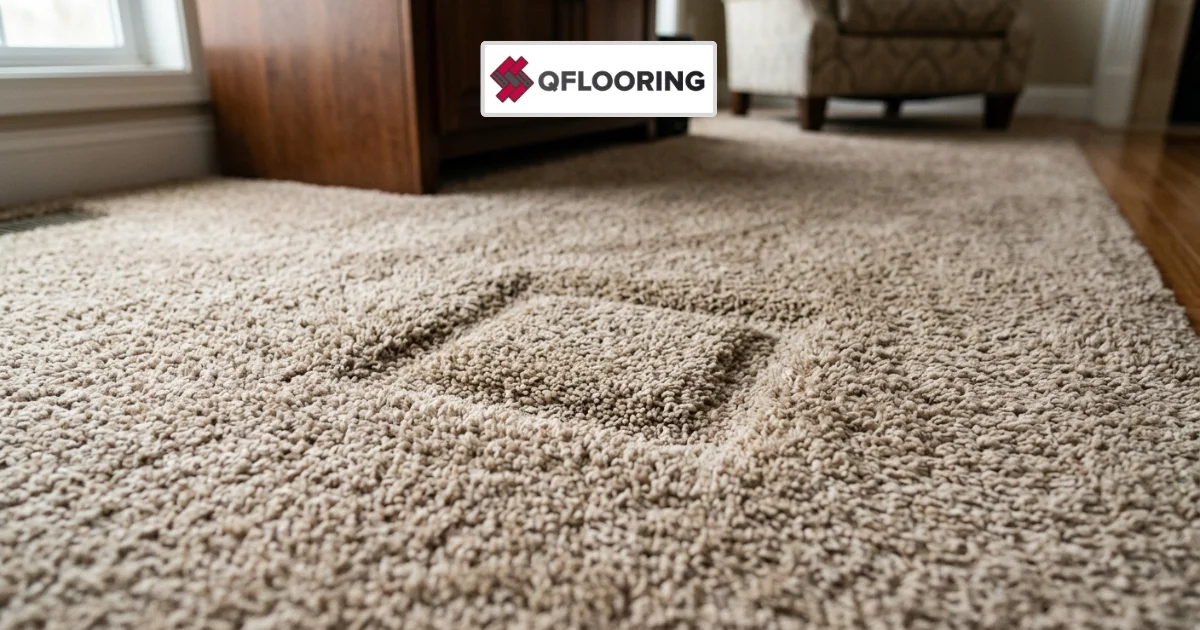
You finally rearrange the living room. The sofa looks better by the window, the coffee table has moved and then you notice them: four deep little craters where the furniture used to be.
Don’t worry. In most cases those dents aren’t permanent. The carpet fibres have been squashed flat, not destroyed and with a little moisture, gentle heat and some patient fluffing, they’ll usually spring back.
This guide walks you through every method that actually works, which one suits which type of carpet, what to avoid and when a dent means it’s time to talk to a professional. We supply and fit carpets across Folkestone, Hythe and the rest of Kent, so we’ve seen how furniture marks behave on just about every pile type going.
The Quick Answer: How Do You Get Furniture Dents Out of Carpet?
The easiest way is the ice cube method. Place an ice cube on each dent and let it melt completely (a few hours or overnight for deep ones). Blot the damp patch with a dry cloth, then lift the fibres with a spoon, coin or fork. Vacuum once the area is fully dry.
For stubborn dents, use steam instead: hold a steam iron just above a damp towel laid over the dent, then fluff the pile by hand.
Both methods work because moisture and gentle heat relax the compressed fibres so they can stand up again.
Why Furniture Leaves Dents in Carpet
A carpet is made of thousands of tiny upright fibres that rely on being springy. When a heavy wardrobe, sofa or bookcase sits in one spot for months, all that weight pushes the pile down and presses the underlay beneath it.
Three things decide how bad the dent gets:
- Weight and foot size. A heavy piece standing on small, narrow feet concentrates the pressure into a tiny area. A sofa with wide, flat feet spreads it out.
- Time. A table moved after a week leaves a faint mark. A bed that’s been there for five years leaves a canyon.
- Carpet type. Dense, tightly twisted pile bounces back better than soft, plush or velvet finishes, which show every mark.
Knowing this helps you set expectations. A fresh dent can vanish in an hour. A years-old one may need a couple of rounds and the very worst might never disappear completely.
What You’ll Need
You probably have everything already:
- Ice cubes (or a damp cloth and a steam iron)
- A clean, dry cloth or old towel
- A spoon, coin, fork or old toothbrush
- A vacuum cleaner
- A hairdryer (optional)
5 Ways to Remove Furniture Dents from Carpet
Method 1: The Ice Cube Method (Best for Most Carpets)
This is the gentlest option and the one we’d try first, especially on wool or delicate carpets.
- Move the furniture and clear the area. Hoover the dent first so you’re not working dirt into the fibres.
- Place one ice cube in each dent. For a wide, deep dent, use a few cubes close together.
- Leave it to melt slowly. Four hours is the usual guide. For deep, long-standing dents, overnight works better. Slow melting lets the fibres soak up the water gradually, swell and straighten.
- Blot, don’t rub. Press a dry cloth onto the damp patch to lift the excess water.
- Fluff the pile. Use the edge of a coin, a spoon or your fingertips to tease the fibres upright, working from the outside edge towards the centre.
- Let it dry fully, then vacuum lightly.
Good to know: Don’t put the furniture back on a damp patch. Wait until it’s completely dry, or you’ll just squash the fibres down again. Putting a fan nearby speeds things up.
Method 2: Steam and a Damp Towel (Best for Deep Dents)
When ice alone doesn’t cut it, a little heat gives the fibres the extra nudge they need.
- Lightly mist the dent with water, or lay a damp (not dripping) towel over it.
- Hold a steam iron or garment steamer just above the towel. Don’t let the hot plate touch the carpet.
- Steam for around 15 seconds, then lift the towel away.
- Immediately fluff the fibres with a spoon, toothbrush or your fingers while they’re warm and soft.
- Repeat once or twice if needed, then leave to dry.
Be careful with: Polypropylene and some other synthetic carpets can be sensitive to heat and prolonged high heat can leave a shiny or melted patch. Test on a hidden spot first, keep the iron moving and stay short of the carpet surface. Skip this method altogether on delicate natural fibres like silk.
Method 3: Hairdryer and a Spoon (Quick Fix for Light Dents)
Best for low-pile or synthetic carpets and mild dents.
- Mist the dent lightly with water.
- Blow warm air over it on a medium setting, keeping the dryer a few inches away.
- While it’s warm, rub the fibres upright with the back of a spoon.
It’s quick, but it works best on shallow dents. Deep ones need ice or steam first.
Method 4: Vacuum or Carpet Rake (Best for Light Marks and Drag Marks)
If the dent is fresh, or the mark comes from dragging furniture across the carpet, you might not need any water at all. A vacuum with a beater brush can lift the pile and a carpet rake or stiff-bristled brush can coax stubborn fibres upright. Use moderate pressure and work across the pile in a few directions. Choose the right setting for your carpet, as an aggressive beater bar can fuzz up some loop pile styles.
Method 5: Just Fluff It by Hand (Best for Fresh, Shallow Dents)
Sometimes the simplest approach is enough. Run your fingers or a comb through the fibres to separate them, then let foot traffic and regular vacuuming do the rest. Fresh, minor dents often recover within a few days without any special treatment.
Which Method Should You Choose? A Quick Comparison
| Method | Best for | Time needed | Risk level |
| Ice cubes | Most carpets, wool, mild to medium dents | 4 hours to overnight | Very low |
| Steam and damp towel | Deep, older dents on durable carpets | 10 to 15 minutes plus drying | Medium (heat) |
| Hairdryer and spoon | Light dents on synthetic or low-pile carpet | 10 minutes | Low to medium |
| Vacuum or carpet rake | Fresh dents and drag marks | 5 minutes | Low |
| Fluffing by hand | Very shallow, recent marks | A few minutes | None |
Does the Method Change Depending on Your Carpet Type?
Yes and this is where most guides skip the detail. Carpets aren’t all the same, so neither is the safest way to fix them.
Wool carpets. Wool is naturally springy and recovers well, so it’s often the most forgiving. Stick to the ice method and use only as much moisture as you need. Avoid soaking the carpet or applying strong heat. If you’re considering one, our wool carpets are a good choice for resilience.
Synthetic carpets (nylon, polyester, polypropylene). These respond well to ice and light steam. Nylon is tough and bounces back nicely, while polypropylene needs gentler heat. Always test first.
Twist pile. Tightly twisted fibres hide dents better and recover faster. If your home sees heavy furniture and busy family life, twist pile is a sensible, practical choice.
Loop pile. Dents can show as flattened loops. Fluff gently rather than raking aggressively, which can snag them.
Velvet, saxony or deep plush. These beautiful, soft finishes show footprints and marks easily. Dents can be fixed, but they may need a bit more patience.
Carpets with natural backings. Too much water can sometimes cause staining or browning from natural backing materials, so keep moisture light and dry the area quickly.
If you’re not sure what you’ve got, ask us. Bring in a small offcut or send us a photo and we’ll tell you what you’re dealing with.
Why Some Dents Won’t Budge (and What to Do About It)
If you’ve tried a couple of rounds and the dent still looks stubborn, there are usually a few reasons:
- The underlay is compressed. Heavy furniture can squash the underlay beneath the carpet as well as the fibres on top. Once underlay is permanently flattened, the dent sits lower than the surrounding carpet and fluffing the fibres alone can’t fully fix it.
- The carpet is old or worn. Tired fibres have lost their bounce, so they don’t recover like new ones.
- The dent is very, very old. After years under the same piece, fibres can set into place.
- You moved the furniture back too soon. It’s the most common mistake we see.
If you’re in this situation, try moving the furniture a few inches and repeating the treatment once more. If that fails, a professional carpet clean with hot water extraction can help lift the pile and a fitter can sometimes replace a damaged section or restretch the carpet. In some cases, particularly with worn carpet in a high-traffic room, a new carpet is the more sensible option than endless repairs.
Common Mistakes to Avoid
- Soaking the carpet. More water doesn’t mean better results. It risks mould, odours and backing damage.
- Rubbing hard with a stiff brush. You’ll fuzz or fray the fibres.
- Putting a hot iron directly on the carpet. Always use a damp towel as a barrier.
- Skipping the patch test. Test hidden areas first, such as inside a wardrobe or under a sofa.
- Replacing the furniture while damp. Give the carpet time to dry.
- Giving up after one try. Deep dents often need two or three treatments.
How to Prevent Furniture Dents in Carpet
Fixing dents is satisfying, but not having them is better.
- Use furniture cups or coasters. They spread the weight over a wider area, so less pressure lands on each patch of carpet.
- Move furniture slightly every few months. Shifting a sofa or bookcase by even a couple of inches gives compressed fibres a chance to recover.
- Choose a good quality underlay. A dense, supportive underlay helps your carpet resist compression and last longer.
- Pick the right carpet for the room. Twist pile and wool blends handle heavy furniture better than soft, deep pile.
- Lift, don’t drag. Dragging causes distortion and drag marks. Ask someone to help you lift or use furniture sliders when moving heavy pieces.
- Vacuum regularly. It keeps the pile upright and stops dirt wearing the fibres down.
Choosing a Carpet That Hides Dents Better
If you’re replacing carpet and you’re tired of furniture marks, a few choices make a big difference. Look for dense, tightly twisted pile, a higher wool content or a hard-wearing blend and pair it with a quality underlay. Neutral, flecked or heathered colours also disguise minor marks better than a plain, light, flat finish.
Our team at our Folkestone showroom can talk you through the options and show you samples in person, so you can feel how the pile responds. Have a browse of our carpet range to get started.
Frequently Asked Questions
Will furniture dents in carpet go away on their own?
Sometimes. Fresh, light dents often recover within a few days with regular foot traffic and vacuuming. Dents from furniture that has been in place for months or years usually need treatment and the oldest ones may never disappear completely.
How long does it take for an ice cube to remove a carpet dent?
Around four hours for most dents. For deep or long-standing ones, leaving the ice to melt overnight gives better results. Allow extra time for the area to dry before you put furniture back.
Can I use a steam iron to get dents out of carpet?
Yes, as long as you protect the carpet. Place a damp towel over the dent and hold the steam iron just above it for around 15 seconds. Never press the hot plate directly onto the carpet and test a hidden patch first, especially on synthetic carpets.
Does the ice method work on rugs?
Yes. Slide a towel underneath first to protect the floor below. The ice method also helps flatten curled-up rug corners.
Do carpet dents damage the carpet permanently?
Usually not. The fibres are compressed, not broken. However, extreme or very long-term pressure can set the fibres or flatten the underlay beneath, which can make a dent harder to fix.
How do I get furniture drag marks out of carpet?
Vacuum with a beater brush or use a carpet rake to lift the flattened fibres. For stubborn marks, use the ice or steam method. Tackling them quickly gives the best results.
What’s the best carpet for heavy furniture?
Dense, tightly twisted pile carpets and wool-rich blends tend to resist and recover from furniture marks best. A good underlay underneath makes a noticeable difference too.
When should I call a professional?
If several treatments haven’t worked, the underlay seems flattened, the carpet is worn or you’d like a hot water extraction clean, it’s worth getting expert advice.
Final Thoughts
Furniture dents are one of those annoying little things that look worse than they are. With some ice, a bit of patience and a spoon, most of them disappear without any expense. Start gently, try steam if you need more power and give the carpet time to dry before the furniture goes back.
If the dents are telling you the carpet has simply had its day, we’re happy to help. QFlooring supplies and professionally fits carpets, LVT, vinyl and laminate for homes and businesses across Folkestone, Hythe and Kent.
Need a Hand With Your Carpet?
Visit our showroom: QFlooring, 105 Sandgate Road, Folkestone, Kent CT20 2BQ
Call: 07376 387750
Email: info@qflooring.co.uk