Kitchen floors have a hard life. Spilt pasta water, dropped pans, muddy school shoes, a dog who skids around the island: your floor takes all of it, every day. And because you’ll live with it for years, it’s worth getting the choice right.
We’ve been fitting floors in Folkestone and across Kent since 2007, so we’ve seen what holds up in a real kitchen and what doesn’t. Here’s our honest take on the main options.
What makes a good kitchen floor?
Before comparing materials, it helps to know what you’re asking the floor to do. These are the things we’d check first:
- Water resistance. Spills and splashes are a given. The floor shouldn’t swell, warp or stain when they happen.
- Durability. Think heavy appliances, dropped cookware and constant foot traffic.
- Easy cleaning. A smooth, non-porous surface saves a lot of scrubbing.
- Grip. This matters most if you have young children or older relatives at home.
- Comfort. If you’re on your feet cooking for an hour, a softer floor makes a real difference.
- Underfloor heating. Not every floor suits it, so always check the manufacturer’s guidance.
- Looks. The floor sets the tone for the whole room.
Kitchen flooring at a glance
| Flooring type | Water resistance | Feel underfoot | Best for |
| LVT | Excellent | Soft and warm | Most kitchens |
| Sheet vinyl | Excellent | Soft and warm | Busy family homes, rentals |
| Laminate | Fair (good with a waterproofing system) | Firm | Open-plan, lower-traffic kitchens |
| Ceramic/porcelain tile | Excellent | Hard and cool | Traditional looks, heated floors |
| Hardwood | Poor | Firm and warm | Character homes where moisture risk is low |
5 Best Kitchen Flooring Options
1. Luxury vinyl tile (LVT): the best all-rounder
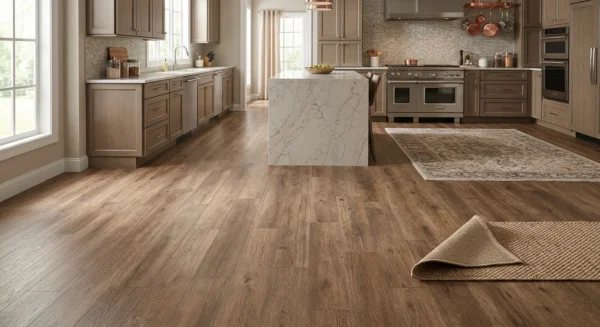
If a customer asks what we’d put in our own kitchen, LVT is usually the answer. It gives you the look of natural oak or stone, but it’s far more forgiving. The core is waterproof, so spills won’t make it swell or warp, and it’s warmer and softer underfoot than tile. It also works well with underfloor heating.
Why people love it:
- Waterproof core, so everyday spills aren’t a worry
- Realistic wood and stone finishes in dozens of styles
- Scratch- and scuff-resistant wear layer
- Comfortable and warm to walk on
- Suitable for underfloor heating (check the specific product)
- Tough enough for busy family kitchens
Our Excelsior and Serene LVT ranges are popular if you want the natural oak look without the upkeep of real wood.
2. Sheet vinyl: practical and hygienic
Sheet vinyl has been a kitchen favourite for decades, and it’s easy to see why. It comes in wide rolls, so there are few or no joins for water to creep through. It’s hygienic, simple to wipe clean, and one of the most cost-effective options on this list.
Modern designs are a long way from the dated patterns you might remember. You can get convincing stone, wood and geometric tile effects, and our Goliath and Gripstar ranges have reinforced wear layers that stand up well to scuffs and scratches.
It’s a smart pick for rental properties, busy households and anyone keeping a renovation on budget.
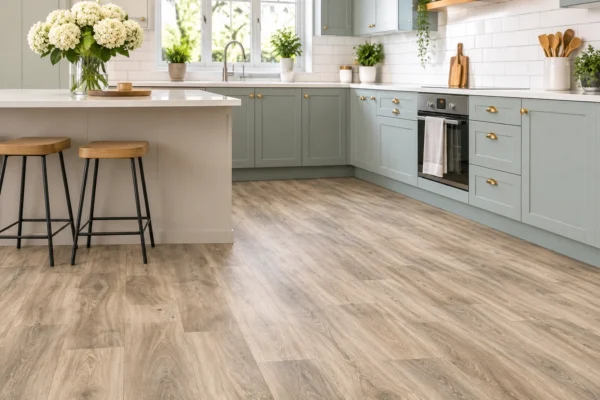
3. Laminate: stylish, but choose carefully
Laminate has come a long way. The wood and stone effects are very convincing now, and it’s one of the easiest floors to fit yourself thanks to click-together systems like Uniclic.
The catch is that standard laminate isn’t waterproof, and kitchens are exactly where that matters. If you want laminate, pick one designed for it. Our QFlooring Eligna range comes with a 10-year water warranty when it’s installed with the QFlooring Hydrokit system.
Laminate works well when:
- Your kitchen opens into a dining or living area and you want one continuous floor
- Foot traffic is moderate and spills are quickly mopped up
- You want a wood look without paying for real hardwood
- You’re planning to lay it yourself
Our ranges, from QFlooring Creo to the premium AGT Natura, cover everything from Scandinavian light oak to dramatic dark walnut.
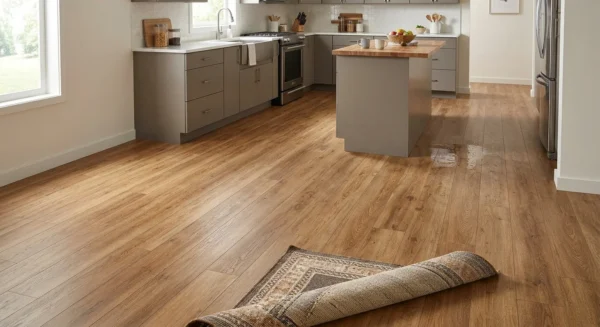
4. Ceramic and porcelain tile: the hardwearing classic
Tile is tough, waterproof, heat-resistant and can last for decades. It’s a natural fit for traditional and Mediterranean-style kitchens, and it pairs well with underfloor heating, which takes the chill off.
The downsides are real, though. It’s hard underfoot, so dropped glasses rarely survive. It’s cold without heating, and grout lines need regular cleaning and the occasional reseal.
If you love the tile look but not the hardness, LVT in a stone or slate effect gets you most of the way there.
5. Hardwood: beautiful, but it needs care
A real wood floor in the kitchen looks wonderful, and we understand the appeal. But solid timber and water don’t get along. Spills, steam and humidity can lead to staining, cupping and swelling over time.
If you’re set on real wood, engineered hardwood copes with moisture better than solid boards. For most homeowners, though, a good wood-effect LVT gives you the look with far fewer worries.
Five questions to ask before you buy
-
How busy is your kitchen?
For heavy daily use, look for a higher wear rating. Laminate is graded AC1 to AC5 (AC4 or above suits kitchens), while vinyl and LVT use their own classes. Class 23 is the usual domestic standard, and class 33 is better for heavy use.
-
Do you have underfloor heating?
LVT and waterproof laminate generally work well with it, but always confirm with the manufacturer.
-
What’s your budget?
Remember to factor in fitting, underlay and any subfloor preparation as well as the flooring itself. Our team can talk you through the options at each budget level.
-
Who uses the kitchen?
With children or older residents, choose a floor with a good slip-resistance rating and a bit of cushioning.
-
What style are you after?
Scandi-light oak, rustic farmhouse, sleek and industrial: there’s a floor for each, and we can help you narrow it down.
Frequently asked questions
What’s the most durable kitchen flooring?
Porcelain tile and good-quality LVT are both very hard-wearing and can last for many years with sensible care. LVT is softer and warmer underfoot, which is why more people choose it.
Is laminate okay in a kitchen?
It can be, if you choose the right product. Standard laminate isn’t suited to wet areas, but a water-resistant range installed with the correct system, such as Eligna with Hydrokit, is a sound option for kitchens.
What’s the easiest kitchen floor to keep clean?
Sheet vinyl and LVT. A damp mop and a neutral floor cleaner will do the job, with no grout to scrub.
Can I lay new flooring over my old kitchen floor?
Often, yes. Click-fit LVT and laminate can usually float over an existing surface, provided it’s flat, dry and sound. A quick check by a fitter will save you trouble later.
Ready to choose your kitchen floor?
Choosing a floor is easier when you can see and touch the samples. Pop into our showroom at 105 Sandgate Road, Folkestone, Kent CT20 2BQ, or get in touch for free advice and a no-obligation quote.