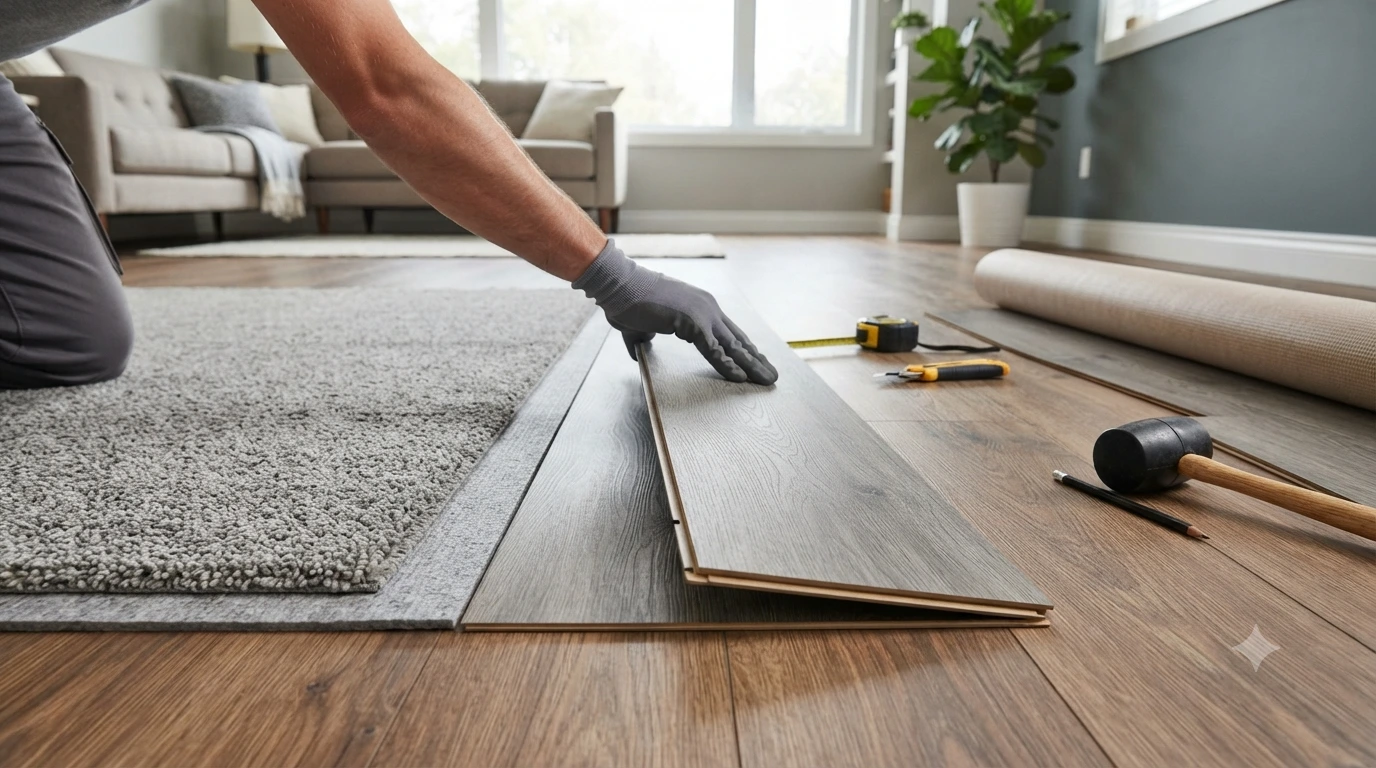
Yes, you can often lay new flooring straight over laminate — it really comes down to what you’re fitting and the shape your existing laminate flooring is in. Vinyl, LVT, carpet and click-fit engineered wood usually sit happily on top. Tiles, solid hardwood and glue-down products are a different matter, though — they need a solid, stable subfloor beneath them, not a floating laminate base.
Can You Actually Lay New Flooring Over Laminate?
Laminate flooring is what’s known as a floating floor. It isn’t fixed to the subfloor at all — the planks simply click together and “float” as one connected sheet across the room. That’s fine for laminate itself, but it creates a few complications when you want to build another floor on top.
Why Laminate Is Tricky to Build On (Floating Floor Explained)
Floating floors aren’t fully still — they shift a touch as the temperature and humidity in your home change. Whatever sits on top has to move with it, not against it. Rigid stuff that can’t flex will crack or shift eventually. Honestly, how the laminate was fitted matters just as much as what you lay over it.
If you’re new to how laminate works, our ultimate guide to laminate flooring covers the basics in more detail.
Floor Height and Doorway Clearance Issues
Add another layer on top of laminate and your floor height creeps up — and that’s not as minor as it sounds. Doors can start catching, skirting boards can look out of place and thresholds between rooms can end up uneven. Always measure the gap under your doors before committing to a new layer.
Moisture and Ventilation Concerns
Moisture is where laminate really struggles and the subfloor underneath it isn’t much better. Any dampness trapped there gets sealed in once you add a second layer of flooring, which stores up trouble rather than solving it. It’s something we flag most often in older homes and ground-floor rooms.
Will It Void Your Warranty?
Some laminate manufacturers are clear that their product was never meant to double up as a subfloor for something else. Worth digging out your warranty paperwork before you start layering flooring on top, particularly if the laminate’s only a few years old.
Best Flooring Options to Install Over Laminate
Vinyl Over Laminate
Sheet vinyl is one of the most forgiving options when it comes to installing flooring over laminate. It’s flexible, relatively thin and doesn’t add much height to the room. It copes well with the slight movement of a floating floor beneath it, provided the laminate is flat and free of gaps.
LVT Over Laminate
LVT over laminate is a popular choice with our customers and for good reason. Click-fit LVT behaves similarly to laminate itself — it floats independently and isn’t glued down — so the two layers move in a compatible way. Glue-down LVT is a different story, which we’ll come to shortly.
Carpet Over Laminate
Carpet over laminate works nicely in bedrooms and living rooms, especially with a decent underlay to iron out any minor bumps below. The one thing to watch is the gripper rods — they need something solid to bite into and a floating laminate surface doesn’t always give them that.
Click-Fit Engineered Wood Over Laminate
Click-fit engineered wood can also be floated straight over existing laminate. It isn’t glued down, much like LVT, so it moves in step with the laminate underneath rather than fighting against it. If you fancy a more premium look without tearing up the existing floor first, this is often a good middle ground worth considering.
Floating Cork Flooring Over Laminate
Cork in a floating click format behaves much like engineered wood or LVT — forgiving of movement, soft underfoot and it brings a bit of natural warmth to a room without needing to be fixed to the subfloor.
Laminate Over Laminate (Is It Worth It?)
You can lay new laminate over old laminate, though we’d usually recommend against it unless the existing floor is in excellent condition. Two floating floors stacked together can behave unpredictably and you lose the chance to check the subfloor for damage or damp underneath.
If your laminate has genuinely reached the end of its life, ranges like our Eligna laminate or the AGT collection are worth a look as a proper replacement instead.
Flooring Types You Should Avoid Laying Over Laminate
Ceramic and Porcelain Tiles
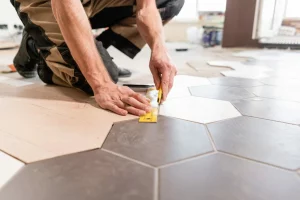
Tiles need a completely rigid, unmoving base. Laid over a floating laminate floor, even tiny amounts of flex are enough to crack grout lines or the tiles themselves within months.
Solid Hardwood Flooring
Solid hardwood is typically nailed or glued to a stable subfloor and needs to acclimatise directly to the room’s conditions. Laminate underneath interferes with both the fixing method and the wood’s ability to adjust properly.
Glue-Down LVT
Unlike click-fit LVT, glue-down versions rely on strong adhesion to a solid, porous surface. Laminate’s smooth, sealed finish doesn’t allow the glue to bond properly, so the new floor can lift or bubble over time.
Natural Stone Flooring
Natural stone is heavy, rigid and completely unforgiving of movement. It demands a solid subfloor for both structural support and a lasting bond, which a floating laminate floor simply can’t offer.
How to Prepare Laminate Flooring Before Installing a New Floor
Check for Levelness and Damage
Have a walk round the room and check for lifted edges, warping, or gaps between the planks. Even a small dip can show through thinner flooring like vinyl or LVT, so sort these out first.
Clean and Inspect the Surface
Give the laminate a thorough clean and check for any signs of damp, mould or staining. These are warning signs that something beneath the laminate needs attention before you cover it up.
Choose the Right Underlay
The correct underlay makes a real difference to how your new floor performs. It helps absorb minor movement, improves sound insulation and can smooth out slight unevenness in the laminate below.
When Underlayment Isn’t Enough
If the laminate has significant damage, soft spots or persistent damp, no amount of underlay will fix the underlying problem. In these cases, it’s more honest — and cheaper in the long run — to remove the laminate first.
When It’s Better to Remove Laminate First
Damaged or Uneven Laminate
If planks are cracked, lifting or noticeably uneven underfoot, covering them up rather than replacing laminate flooring properly is only delaying the inevitable.
Kitchens, Bathrooms and Wet Areas
Wet areas are one of the clearest cases for removing laminate entirely. Trapped moisture between two floor layers can lead to mould and structural issues that are far more costly to fix than the flooring itself.
Rooms With Limited Floor Height
If you’re already tight on clearance under doors or against fitted units, adding another layer may simply not be practical. Removing the laminate first gives you back that height.
Long-Term Value vs Quick Fix
Layering flooring over laminate can be a sensible short-term solution, but it isn’t always the best long-term investment. If you’re planning to stay in the property for years to come, starting with a solid, well-prepared subfloor tends to pay off.
Expert Advice from QFlooring
Get a Professional Assessment
Every laminate floor is different and what works in one room won’t necessarily work in another. We’ve seen plenty of jobs where a quick site visit saved the customer from a costly mistake further down the line.
Talk to Us Before You Buy Materials
Before you order flooring based on assumptions about what will sit happily over your existing laminate, it’s worth having a conversation with us. We can talk you through suitable options and flag anything that might cause problems once installation gets underway.
Final Thoughts: Choosing the Right Floor Over Laminate
Whether you can install flooring over laminate really comes down to two things: the condition of the laminate underneath and how compatible your chosen flooring is with a floating floor. Vinyl, LVT, carpet and click-fit engineered wood are generally safe bets, while tiles, solid wood, glue-down LVT and stone need a proper subfloor instead.
If you’re unsure which route makes sense for your home, get in touch with the team at QFlooring — we’re happy to advise before you spend a penny on materials.
FAQs
Can you put vinyl flooring over laminate?
Yes, sheet vinyl generally copes well with the slight movement of a floating laminate floor, as long as the laminate is flat, clean and in good condition beforehand.
Is LVT suitable over laminate?
Click-fit LVT is well suited to laying over laminate since both floors float independently. Glue-down LVT isn’t recommended, as it needs a solid, porous surface to bond to properly.
Can you lay carpet directly over laminate?
Yes, with a suitable underlay. The main consideration is fitting gripper rods securely, since laminate itself isn’t fixed firmly enough to hold them on its own.
Do you need underlay when installing over laminate?
Usually, yes. A good underlay helps smooth minor imperfections, improves comfort underfoot and gives the new flooring a bit of cushioning against the laminate’s slight movement.